
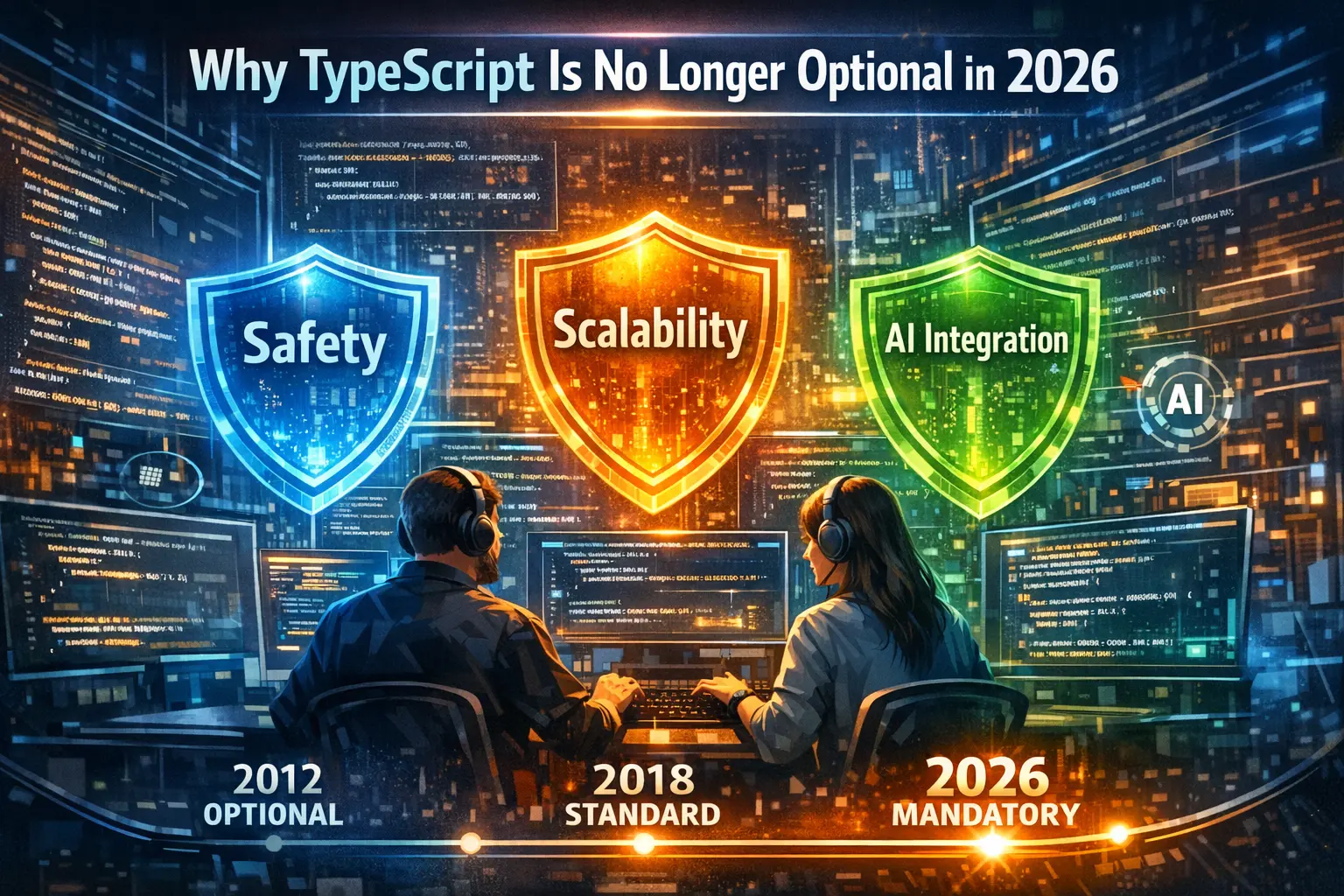
Why TypeScript Is No Longer Optional in 2026
A few years ago, TypeScript was the tool that "serious" teams used and everyone else argued about on Twitter. That debate is over. In 2026, TypeScript is the default. If your project doesn't use it, you're the exception and increasingly, employers notice.
What Changed
The tipping point was the ecosystem catching up. Every major framework Next.js, Remix, Nuxt, SvelteKit ships with TypeScript configured out of the box. NPM packages that don't include type definitions are flagged as legacy. Even beginner tutorials now start with TypeScript from line one.
The result is a generation of developers who have never written a production app without types. Hiring managers now treat TypeScript as table stakes, not a bonus skill.
What You're Actually Missing Without It
It's not just about catching bugs before runtime. TypeScript changes how you think about your code. You're forced to be explicit about data shapes, function contracts, and API responses. That explicitness makes codebases easier to navigate, easier to refactor, and dramatically easier for teams to work in.
The other underrated benefit: autocomplete. A well-typed codebase gives your editor enough context to suggest the right thing at the right time. This alone speeds up development noticeably once you're used to it.
The Learning Curve Is Overstated
Most developers who avoid TypeScript do so because of one bad early experience with complex generic types or strict mode errors. The truth is you don't need to master advanced TypeScript to get 80% of the benefit. Start with basic type annotations on function parameters and return values. Add interfaces for your data models. Let the compiler guide you from there.
You don't need to understand every edge case on day one. You just need to start.
How to Get Up to Speed Fast
The fastest path is to take an existing small JavaScript project and migrate it file by file. Don't try to convert everything at once. Enable strict mode from the start — it's painful initially but saves you from bad habits later.
The TypeScript documentation is genuinely excellent. The official handbook covers everything you need for day-to-day work in a few focused hours.
Verdict
TypeScript isn't going away. The longer you wait, the bigger the gap between you and developers who've been writing it for years. Start small, start now, and within a month it will feel as natural as JavaScript ever did.
Table of Contents
- Why TypeScript Is No Longer Optional in 2026
- What Changed
- What You're Actually Missing Without It
- The Learning Curve Is Overstated
- How to Get Up to Speed Fast
- Verdict